
The Galvanometer Heartbeat of Seismic History
As I walk about the geophysical museum today, I am captured by a glisten from a shelf
at eye level. This reflected light instantly reminds me of the 1980s disco balls that hung
in the clubs, their multifaceted mirrors reflecting rays of light in all directions in beat with
the music. But this glisten on the shelf is highly elegant and tells a deeper, richer story.
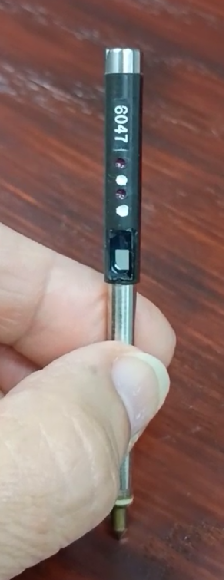
The item is a galvanometer pencil, Figure 1, a marvel of analog engineering that once served as the literal heartbeat of seismic exploration, translating the silent vibrations of the Earth into visual symphonies of data.
As an interpreting geophysicist, the greatest joy of the job was being able to look deep into the earth through seismic data in search of critical energy reservoirs. If we were given the “first ever” seismic shot in an area, I felt the caffeine rush of being the first true explorer! Decades before computers or digital displays transformed the oil and gas industry, this tiny galvo ruled the field inside rugged seismic recording trucks.
Let’s take a journey through the development, mechanics, and eventual phase-out of these priceless galvo-pencils.
How Did the Galvo Develop?
The story begins in 1820. The first primitive galvanometer was reported by German physicist and mathematician Johann Schweigger at the University of Halle on September 16, 1820. Schweigger built his device just months after Hans Christian Ørsted discovered that electric currents create magnetic fields capable of deflecting a compass needle. By wrapping a wire into a multiple turn coil around a needle, Schweigger multiplied the electromagnetic effect significantly, allowing the device to detect incredibly faint currents. He originally named it a "multiplier" but the scientific community later adopted the name "galvanometer" in honor of Luigi Galvani, the Italian pioneer of bioelectricity. Thirty-eight years later, in 1858, William Thomson (Lord Kelvin) patented the mirror galvanometer, which replaced physical needles with lightweight mirrors and light beams to detect weak signals across the transatlantic telegraph cable (who knew there was a tie-in to early global telecommunications?) Another generation later, in 1882, Jacques-Arsène d'Arsonval and Marcel Deprez reversed the design to create the moving-coil galvanometer. Instead of a moving magnet inside a fixed coil, they suspended a moving coil inside a powerful permanent magnet; a design that is the direct ancestor of the miniature seismic pencil galvo.
How it works
A typical pencil galvanometer diagram is shown in figure 2, taken from a 1961 patent. A coil (1 in Fig 2 and 4) is between pole pieces #10 and #11 of a permanent magnet (not shown). The coil and magnet assembly are held in place by wires and metal strips, with the tension in springs housing the mirror-coil #2 assembly in figure 2 in position. The mirror dimensions are 1/8th of an inch to put the scale of precision into perspective, figure 3. Current applied to the coil forces it to rotate an angle proportional to the current. A beam of light shone on the mirror from the camera body is reflected to a neutral location on a strip of photographic paper when there is no current passing through the coil. Any current moves this beam from side to side. Moving the beam of light puts no load on the current source, so the only load is the resistance of the spring.
Fig 2: Diagram of a pencil galvanometer. Fig 3: Dimensions of a pencil galvanometer.
Galvanometers were typically arranged in sets to record “wiggle traces” recorded on photographic paper six to ten inches wide, moving at speeds of 3 to 12 inches per second. Early seismic cameras used paper-drive systems built using spring-driven phonograph mechanisms, but later cameras used electric motors to move the paper. Figure 4 is an inside look at an early motor driven camera from 1948 built by Engineering Labs. In the left chamber are 12 galvanometers on the left and a light source on the right. Figure 5 is a close-up of the galvanometer set with the ink-pen pointing to a small optic lens where a light source channels into the galvanometer and reflects the movement of the mirrors. The right camera chamber contained a roll of photosensitive paper that plotted out the 12 traces from these galvanometers.


The Digital Shift and Legacy
Pencil galvanometers were phased out of the seismic industry between the late 1960s and late 1970s during the digital revolution. The transition began in the mid-1960s with the introduction of digital field systems, which used analog-to-digital converters to write binary streams directly onto magnetic tape. Though pencil galvos briefly survived in the 1970s to produce physical paper "monitor records" for field verification, they were completely replaced by the late 1970s by electrostatic plotters and digital displays, permanently eliminating the need for darkrooms in recording trucks.
In a beautiful twist of history, the pencil galvo in the seismic industry connects the high-energy spectacle of the disco ball with the birth of global telecommunications. Now, put on some '80s music, sink back into the sofa, and reflect on (pun) that before discos, there were galvos!
Visit the Museum
If the history of the galvanometer sparks your curiosity, come explore generations of historic galvanometers and the marvelous, watchmaker-level machinery that pioneered the global geophysical industry. Visit us at the Geophysical Society of Houston (GSH) Museum 1790 W Sam Houston Pkwy N, Houston, Texas. As a registered 501(c)(3) non-profit organization. We keep this rich scientific heritage alive through the generous support of our community, welcoming donations, volunteers, and educational tours.
Courtesy: René Mott and Les Denham
Comments