
2026 Spring Symposium
The Innovation Pivot Geophysical Breakthroughs That Changed Everything
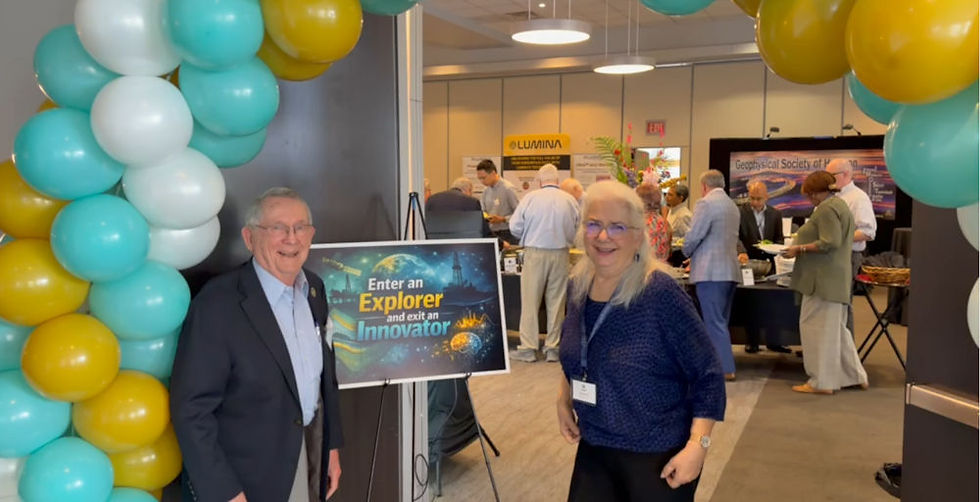
A celebration of innovation, interpretation and community
The 2026 GSH Spring Symposium honored Tom Smith with a two-day program focused on the technical highlights shaping geophysics today and the breakthroughs pointing the discipline toward tomorrow. Across four sessions, speakers explored the current state of geophysics and its business impact, innovations in acquisition, processing and interpretation, the growing role of AI/ML in geophysical analysis, and what 2026 and beyond may require from geophysicists.
Day 1 centered on the current state of geophysics, innovation in geophysical workflows, and a memorable Toast and Roast for Tom Smith. Day 2 carried the momentum into AI/ML, rapid interpretation, the Gulf Coast Challenge Bowl, and a forward-looking discussion of the skills and technologies that will define the next chapter of the profession.
Technology FWI, OBN, 4D seismic and emerging sensing methods are stretching what teams can extract from seismic data. | AI/ML Agentic AI and ML-assisted interpretation are moving quickly, with data quality still calling the shots. | Community The technical program, Toast and Roast, Challenge Bowl, reception and auction made it a celebration to remember. |
What the symposium made clear


The presentations, panels and hallway conversations all pointed in the same direction: geophysics is in a strong position. Industry needs remain clear, technology development is accelerating, and new applications are expanding the role of geophysical insight beyond traditional oil and gas. CCUS, critical minerals, offshore OBN, onshore acquisition geometries, FWI, quantum sensing and AI/ML were all part of a lively discussion about what comes next.
Day 1: Current state of geophysics and business impact

The opening session featured presentations from Anu Venkataraman of ExxonMobil, Rocco Detomo of Omoted Geophysical Consultants, Faqi Liu of TGS, Henry Pettingill of Rose and Associates, and Marianne Rauch of Lumina Geophysical. The session covered how current geophysical technologies apply across exploration, appraisal, development and production, with discussion ranging from OBN seismic and 4D applications to AI-enabled real-time monitoring and evaluation.

Speakers emphasized the continued value of maximizing existing assets through advanced imaging technologies such as FWI, while also reminding the room that conventional DHI-based opportunity identification still has power when supported by the right data, careful integration and cross-disciplinary interpretation.
A Toast and Roast for Tom Smith
The Spring Symposium featured a special tribute honoring Tom Smith for his lasting impact on the seismic interpretation industry and his enduring spirit of innovation. The program celebrated both his professional achievements and the personal journey that shaped them, from his roots in Iowa to his influential career in Texas.
Guest speakers included his son Kyle Smith; Wendy Wintersteen, 16th President of Iowa State University; Fred Hilterman, President of the University of Houston; Rocky Roden, an early KINGDOM DOS user; Christopher Lewis, CTO of KINGDOM Windows; and Debra Sacrey, a longtime KINGDOM user and current Interim COO of Geophysical Insight. Together, their stories highlighted Tom’s influence across generations of technology and talent in geophysics.
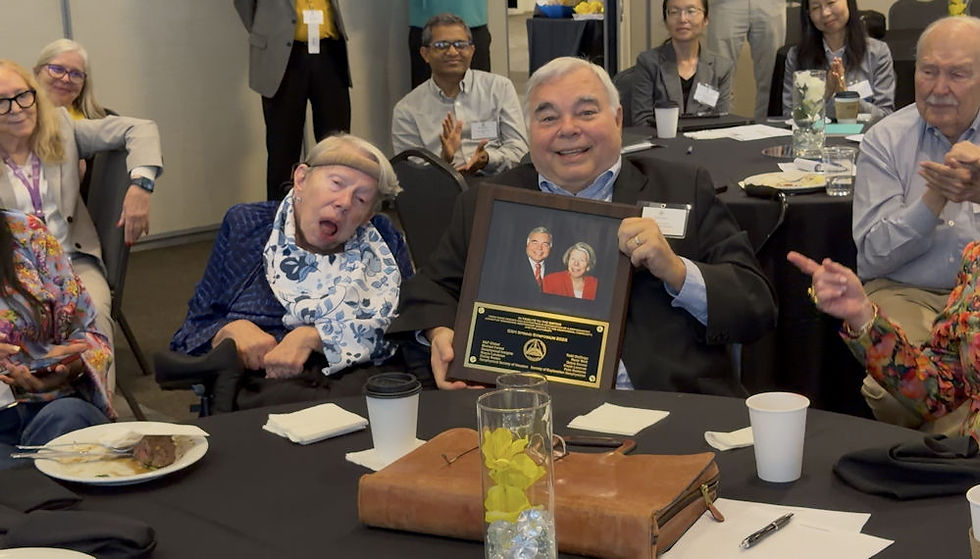
In recognition of their enduring contributions, Tom and Evonne Smith were presented with a plaque as a token of appreciation from GSH. The moment was a warm acknowledgment of a shared legacy that continues to inspire progress, collaboration and excellence within the geophysical community.

Day 1 continued: Innovations in acquisition, processing and interpretation


The second session explored innovations in geophysical acquisition, both onshore and offshore, with particular focus on near-surface velocity characterization, poorly illuminated zones and bandwidth enhancement. Presentations by Bruce Karr of Fairfield and John Naranjo of bp highlighted advances in acquisition technologies and their practical implications.
Processing discussions centered heavily on FWI, including multi-parameter approaches and characterization of reservoir properties. Fabio Mancini of DUG and Zhigang Zhang of Viridien reinforced that improving FWI application matters, but understanding how it affects interpretation and integrated reservoir evaluation matters even more. Chuck Diggins of DigginsGeo also showed how targeted innovations, including Cascade Tomography, continue to bring value to appropriate assets.
Reception, exhibitors and a live auction worth bidding on
The first day concluded with a reception that gave attendees the opportunity to connect directly with participating companies and explore emerging technologies advancing the field of geophysics. Contributing vendors included Geophysical Insight, U3, Lumina and Geo Ex Machina, each bringing a different view into technical analysis, consulting, interpretation, processing and innovative geophysical workflows.
The evening also featured a lively auction, with delighted bidders taking home experiences and items including a week in the Greek Isles, a week in the Hawaiian Islands, a curated case of California wines, aged bourbon with premium accessories, and golden-colored mineral specimens. The reception and auction helped turn a strong technical program into a true celebration.


Day 2: AI/ML and the next disruption in geophysical analysis


The second day opened with a presentation on Agentic AI by Kumar Lakshmipathy of AWS, who outlined its potential application to the energy industry. The pace of advancement is impressive, and the impact on geophysical analysis is arriving quickly. The session also highlighted a key caution: hallucination risk increases when poor or inappropriate data is fed into an AI workflow.
Un-Young Lim and Prasenjit Roy of Chevron discussed AI/ML applications for automating seismic-well ties and enhancing AVA/AVO analysis and seismic inversion through a QI-AI stack. Their examples pointed to improvements in project cycle times and accuracy. Katie Gurses of bp presented rapid interpretation workflows that preserve geologic character while supporting rigorous, scalable and business-relevant decision-making across exploration, development and production. Deborah Sacrey of Geophysical Insights identified machine learning as a disruptive technology for lithology characterization, including shingled sands, with multi-attribute ML and sample statistics potentially changing how geoscientists interpret the subsurface.
Gulf Coast Challenge Bowl
Lunch on the second day was paired with the Gulf Coast Challenge Bowl, hosted by Peter Duncan. Three teams participated - two from the University of Oklahoma and one from Rice University - answering basic but intriguing geophysical and geological questions in front of an engaged audience. After an exciting contest, Matthew Kumar and Ainul Afifi Zafiran Mazlan from Rice University were announced as the 2026 Gulf Coast Challenge Bowl winners.

2026 and beyond: What about geophysics and geophysicists?


The final session turned toward the soft skills, cultural skills and technology awareness that geophysicists will need next. Bob Fryklund of S&P Global Commodity Insights offered insight into the state of global exploration and the role of seismic in its future. Frederic Billette of bp discussed the transformation of the Gulf of Mexico from a seismic perspective and what it may mean for the rest of the world.
Wafik Beydoun of Global Energy and Cross-Cultural Leadership and Rocky Roden of Rocky Ridge Resources added perspectives on cross-cultural communication, leadership and technology trends. The final session gave attendees practical food for thought as they returned to real-world geophysical problems and solutions.
Thank you to the speakers, sponsors, committee members, exhibitors and attendees who made the 2026 GSH Spring Symposium a success. It was technical. It was forward-looking. It was heartfelt. And it was a celebration worthy of Tom Smith. |
Comments